Why flower prices jump before graduations and Parents’ Day, read through the demand calendar
If you buy or sell flowers, half of the flower price outlook comes from the calendar.
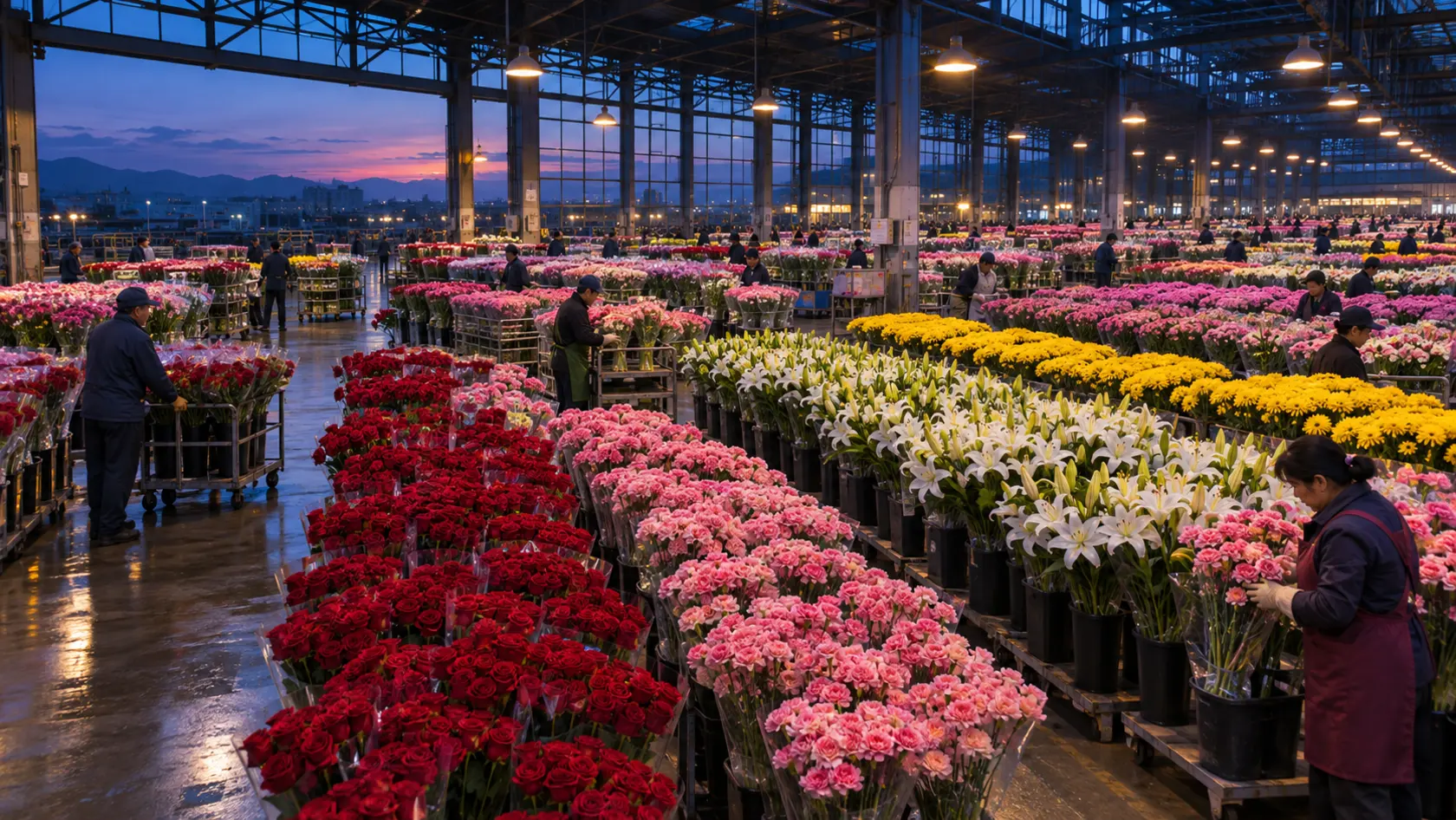
Flower auction prices swing far more than vegetable prices. The same rose can almost double or halve within a few weeks.
Much of that movement comes not from weather or harvests but from the days people buy flowers: graduations, Parents’ Day, Teachers’ Day, Christmas and the year end.
Below we explain how the demand calendar moves auction prices, how BLOOMCAST puts it into forecasts, and what to watch when choosing when to buy.
Category: Flower prices & demand
A flower price outlook has to see the rise before an event and the drop after it
As a holiday approaches, shops and chains all secure stock at once and auction prices rise. Once it passes, demand falls away and prices drop.
BLOOMCAST therefore enters demand events in two ways: “upcoming events” inside the forecast horizon, and “past events” that explain the post-event drop.
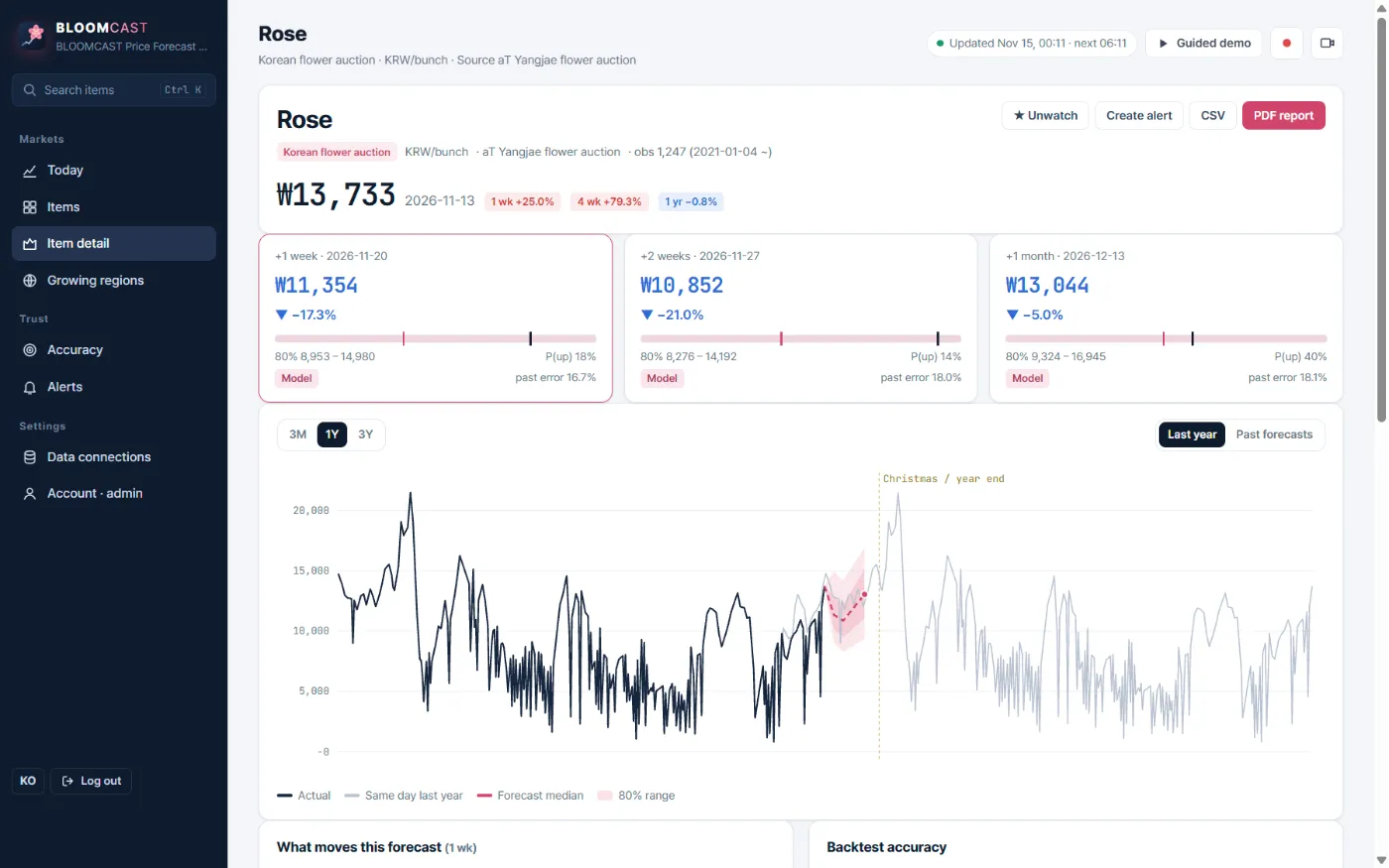
On the demo screen on 15 Nov 2026, the 1-week rose forecast listed “past demand event −0.4 pp” among its drivers, and Christmas and year end (24 Dec) was marked on the chart as an upcoming event 39 days away.
How the demand calendar enters a forecast
Events such as graduations, Parents’ Day, year end and kimchi-making season, with the items they affect.
An event inside the horizon enters as an upward driver.
The drop right after an event is explained separately.
We check at past dates whether it actually reduces error.
Before holidays, the direction of flower prices is easier to call than the level
That prices rise before a holiday is similar every year; how much they rise depends on that year’s weather, import volumes and economy.
So BLOOMCAST gives an 80% range and a probability of a rise, not just a median. In the demo backtest, the 1-week rose forecast had an average error of 16.7%, better than 22.0% for “price stays the same”, and called the direction of moves beyond ±3% 75% of the time.
16.7% is not small. For items that move this much, direction and range are more useful for deciding whether to buy this week or wait two weeks than an exact value.
Buying time is set by the forecast range and your room for stock
When using a forecast for buying, look at three things together: the direction of the median, the top of the 80% range, and the past error at that horizon.
The top of the range says “with bad luck, it could rise this far”. If you can hold stock early, you can size an early purchase against that value.
When roses look set to rise, compare gerbera, lisianthus or hydrangea as well. BLOOMCAST forecasts Yangjae cut-flower items the same way, so substitutes can be compared side by side.
That is how to read flower prices through the demand calendar and forecast ranges; the item screen is described on the item forecasts page.
Frequently asked questions
Which events are in the demand calendar?
Days when demand for flowers and produce changes sharply, such as graduations, Parents’ Day, Christmas and year end, national holidays and kimchi-making season. Each event lists the items it affects.
Is the calendar used for imported flowers too?
Yes, but import unit values are monthly, so they are read in 1 to 3 month steps, together with sunlight and temperature at origin and exchange rates.
What if the forecast is wrong?
Past error is published per item and horizon. Items with large errors get wide ranges, so lean on direction and range.
Tell us the items you trade
We reply with a trial forecast for those items, next to the no-change baseline, so you can judge it on your own numbers.
Request a demo →Edited and answered by the MomentCube BLOOMCAST team / james@momentcube.com · +82-32-212-1011